Why Every Business Needs an Email List (And How to Start One)
Ahh, the email list. Everyone’s always talking about it, you know it’s something you probably should be doing, but honestly it feels like one more big, techy thing on your never-ending business to-do list.
Between choosing an email platform, creating an opt-in, setting up forms, writing welcome emails, and then actually emailing people regularly, it’s no wonder so many business owners put it off. And if you’ve been relying mostly on socials to reach your audience, starting an email list can feel a little daunting or even a little unecessary.
But trust us, email marketing is still one of the most valuable things you can do for your business.
Because while social media changes constantly, algorithms come and go, and platforms can shift overnight, your email list is entirely your own, giving you a direct, reliable way to stay connected with people who actually want to hear from you.
And don't worry, you don’t need a huge list, a complicated funnel, or a million automations to get started. You just need somewhere simple for people to sign up, something helpful to offer them, and a plan for showing up in their inbox in a way that feels useful (and not spammy).
So in this post, we’re breaking down why your business needs an email list, what email marketing actually is, and how to start building your list in a simple, strategic way.
Let's dive in!
What is Email Marketing?
Email marketing is basically using email to stay in touch with your audience, share helpful content, promote your offers, and build a relationship with people who have chosen to hear from you.
Unlike social media, where someone might randomly come across one of your posts while doom scrolling, your email subscribers have intentionally signed up to be on your list, and that's a pretty big deal!
Before we get too far into it, let’s quickly break down the main parts of email marketing:
Email List
Your email list is simply the list of people who have signed up (or "opted in") to receive emails from you (aka your subscribers). Usually, this means they have entered their email address somewhere on your website.
Opt-in
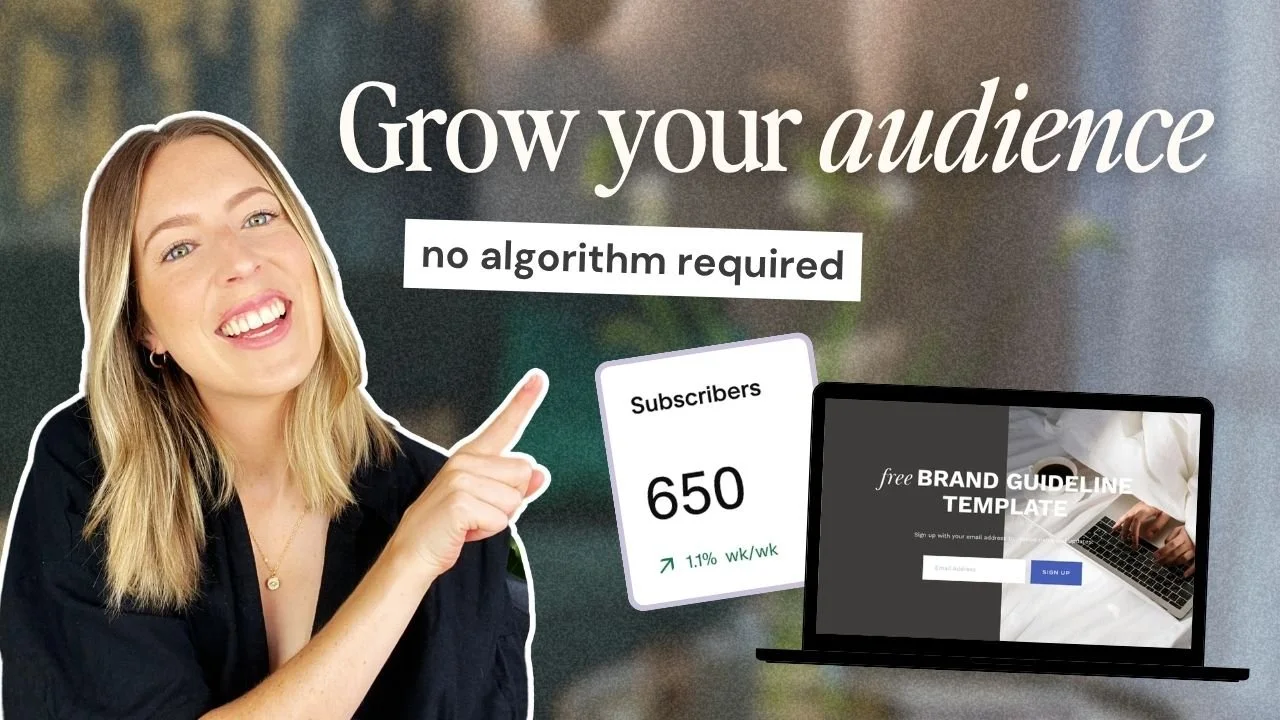
People often need a little extra incentive to hand over their email address, so an opt-in or freebie is usually offered in exchange for joining your list.
You’ve definitely seen these around before. They’re usually the little prompts on websites that say something like “enter your email address to get…” a discount code, free shipping, a free guide, checklist, or other free content like recipes, workouts, templates, or resources.
This is often the part that feels the most daunting, but don’t worry, you can start with something super simple like a discount code or one really useful resource your audience would love. It doesn’t need to be fancy. It just needs to be relevant, helpful, and worth swapping an email address for.
👉 Everything You Need to Know to Create Freebies That (actually) Grow Your Email List
Email Platform
To actually send emails to your list, you’ll need an email marketing platform.
This is different from just sending emails manually from Gmail. An email platform lets you collect subscribers, create forms, schedule newsletters, deliver freebies, and set up automated emails strategically.
Some popular options include Squarespace Email Campaigns, Kit, Flodesk, or Mailchimp, and the best one really depends on your business, your budget, and how fancy you want to get with automations.
If you’re just starting out, don’t overthink it too much. You don’t need the most advanced setup in the world. You just need a simple way for people to join your list and a simple way for you to email them.
👉 Flodesk vs Squarespace Email Campaigns: Which Is Best for Your Business?
👉 Should you use Squarespace Email Campaigns? Pros, Cons, and Alternatives
Welcome Email or Welcome Sequence
Once someone joins your list, it’s a good idea to send them a welcome email.
This could be just one simple email that says hello, introduces your business, delivers the freebie they signed up for, and lets them know what to expect from you.
Or, you can create a welcome sequence, which is a short series of emails that go out automatically over a few days. This can help new subscribers get to know you, learn more about your offers, and feel more connected to your brand before you start selling to them.
But again, it doesn’t need to be complicated! One friendly welcome email is a perfect place to start.
Newsletters and Regular Emails
After someone is on your list, you can keep in touch by sending regular emails.
These might include helpful tips, blog posts, new products, behind-the-scenes updates, offers, launch announcements, resources, or anything else your audience would genuinely find useful.
This is where email marketing becomes a way to build trust with your audience over time, so when you do have something to sell, they already know who you are, what you do, and why they might want to buy from you.
And that’s really the whole idea. Email marketing doesn’t have to be this huge, scary, complicated thing. At its simplest, it’s just a way to stay connected with the people who already want to hear from you!
So, why is it Important to Start Your Email List?
Having an email list is one of the most valuable things you can do for your business. And honestly, if it came down to choosing between building a social media following or starting an email list, we’d probably recommend starting the email list.
That doesn’t mean social media isn’t useful. It absolutely is! But your email list gives you something social media can’t always offer
You own Your Email List
Social Media seems more fun and exciting than building an email list, but it's kinda risky. You put all of this work into perfecting a perfect feed or profile and then suddenly either no one is interested in that social platform anymore, your account gets mysteriously shut down, or the algorithm decides that the post you just spent hours on is only going to be shown to seven people 🥲
With your email list, you have a direct line to your subscribers. These are people who have signed up to hear from you, and your list is something you can take with you if you ever switch platforms, change your website, or move your business in a new direction.
So yes, keep using social media. Keep creating content. Keep showing up where your audience hangs out. But try not to build your entire marketing strategy on platforms you don’t actually control. It’s always a good feeling knowing that everyone on your email list is yours. If you lose all of you followers, you will still have your email list.
No Social Media Algorithms
And while we’re on the topic of comparing your email list to social media, let’s talk about those pesky algorithms... Social Media is a bit like screaming into an empty void hoping someone will hear you. It’s becoming harder and harder to get your message in front of any people, let alone the right people.
With email, you’re not relying on an algorithm to decide whether your subscribers get to see your content. Once someone is on your list, your emails can go straight to their inbox, which makes it feel much more personal and direct.
Of course, not everyone will open every email. People are busy. Inboxes are full. But the difference is, your email subscribers have actively asked to hear from you.
Your Subscribers are Already Interested
This is one of the biggest reasons email marketing can work so well.
The people on your email list have already taken action. They’ve signed up for your freebie, joined your newsletter, downloaded your guide, grabbed your discount code, joined your waitlist, or said yes to hearing more from you in some way.
That means they’re not totally random strangers who may or may not care about what you do. They’re already somewhat interested, which makes it so much easier to serve them, support them, and eventually sell to them.
And because they’re already interested, they’re much more likely to care when you share a helpful blog post, launch a new product, open bookings, promote a template, announce a sale, or send them something genuinely useful!
You can Build a Real Relationship With Your Audience
This might sound a little corny, but it’s true. Email gives you a chance to build a relationship with your audience in a way that feels a little deeper than a quick scroll, like, or comment. It gives you space to tell stories, share helpful advice, explain what you do, and let people get to know your business over time.
There’s two sides to this:
Getting to know your subscribers is great for you because you can continue to serve them with content that they actually want. You can really refine your target audience and content by having conversations with the people who are already there (email is the perfect place to start conversations!). What are their biggest struggles? Why are they following you? Start a conversation, show interest, and you may be surprised by their answers.
On the flip side, getting to know your customer base is awesome for them, because more often than not they want to get to know you too! The more they get to know you, the more they trust you, and the more they become one of your loyal #squad members.
You can ask Questions and Learn What Your Audience Actually Wants
We touched on this above, but one of the best parts about having an email list is that it’s not just a place to talk at people. It’s also a place to start conversations. You can ask your subscribers questions, send surveys, test ideas, or get feedback on your products, services, content, or offers.
Want to know what your audience is struggling with? Ask them.
Want to know what kind of template they’d love next? Ask them.
Want to know why they haven’t booked, bought, joined, or downloaded something yet? Ask them.
Since these are people who are already interested in your business, their answers are often much more useful than asking a totally random audience on social media. They know you, they’ve opted in, and they’re usually more invested in what you’re creating so they are more likely to answer truthfully and helpfully.
Plus, those replies and conversations can give you so many ideas for blog posts, emails, products, offers, website copy, FAQs, and more.
High Conversion Rates
This is the most important and impactful reason to start email marketing. Email marketing is year after year proven to be the most effective means of marketing for actually making sales. It consistently has the highest conversion rate compared to all other marketing methods we've tried.
According to Litmus, email marketing drives an average return of $36 for every $1 spent, which is pretty wild when you compare it to how much time, energy, and money can go into other marketing channels.
With email, you’re not just posting something and hoping the right people see it. You’re speaking directly to people who have already signed up to hear from you. They’re already interested, they already know your business exists, and they’re much more likely to care when you share a new product, service, sale, blog post, launch, or offer.
That doesn’t mean every email you send will magically turn into sales. Email marketing still works best when you’re being helpful, consistent, and actually sending people things they want to read.
But compared to constantly trying to keep up with social media trends and algorithms, email gives you a much more direct way to nurture your audience and guide them toward taking action.
Social media is great, but it shouldn’t be your only marketing platform. Instead, think of social media as one way to bring new people into your world, and your email list as the place where you can keep building that relationship over time.
How to Start Your Email List
So, with all of that in mind, where should you actually start?
When you’re just starting out setting up your email marketing, keep it as simple as possible by focusing on these key tasks to avoid feeling overwhelmed.
Choose an email marketing platform that fits your business and feels simple enough to actually use.
Create a freebie, discount, or opt-inthat feels genuinely helpful and relevant to your audience.
Create a simple signup form so people can enter their name and email address.
Set up your opt-in to send automatically, so when someone signs up, they instantly receive the freebie, discount, link, or resource they asked for.
Add your form around your website and other channels, like your blog posts, footer, pop-up, Instagram link-in-bio, YouTube descriptions, or anywhere else your audience is already finding you.
Write a simple welcome email to introduce yourself, thank them for signing up, and let them know what they can expect from you.
From there, your long-term strategy can be really simple: email your list every one to two weeks with something useful, interesting, or relevant. This could be a blog post, YouTube video, new product, special offer, helpful tip, or anything else your audience would genuinely want to hear about.
And that’s it. Seriously! Start building your list, keep showing up, and let it evolve from there.
Want more email marketing tips? Check out the posts below:
How to get started with email marketing: a simple guide for beginners
How to spend less time on email with these tricks
How to add an Email Sign-up Form to your Squarespace Website
How to add Flodesk to Squarespace
How to Create an Opt-in Freebie Quiz for Your Website